

Cooling towers are critical components in the HVAC systems of commercial buildings, industrial...
Cooling Tower Maintenance: 10 Reasons Every Facility Should Prioritize Preventive Service
Cooling Tower Maintenance: 10 Reasons Every Facility Should Prioritize Preventive Service
16:42
Updated 09/11/2026
Protect Performance, Reduce Downtime, and Extend Equipment Life
Cooling towers are critical to the performance of many industrial processes and commercial HVAC systems. When they are operating properly, they help facilities maintain reliable cooling and support efficient operation. When maintenance is deferred, wear, buildup, corrosion, and mechanical issues can develop into larger problems that affect performance, reliability, and equipment life.
That is why cooling tower maintenance should be more than a response to equipment problems.
A proactive approach combines routine preventive maintenance with condition-based services when needed. Regular maintenance keeps critical components serviced and adjusted, while more comprehensive inspections and predictive services such as vibration analysis can provide deeper insight into equipment condition.
For facility managers, maintenance leaders, and engineers, the goal is simple: understand the condition of the equipment, address developing problems, and keep the cooling tower operating reliably.
Here are 10 reasons preventive cooling tower maintenance should be part of your facility's maintenance strategy.
1. Maintain Cooling Tower Performance
Cooling tower performance depends on proper airflow, water distribution, heat transfer, and mechanical operation.
Over time, equipment condition can change. Fill can become fouled or damaged. Distribution nozzles can develop problems. Fan and drive components can wear or move out of adjustment. Scale, corrosion, and debris can also affect tower operation.
Preventive maintenance gives technicians an opportunity to inspect and service these critical components before their condition begins to interfere with cooling performance.
For example, OBR's preventive maintenance service includes fan system optimization, drive system maintenance, component inspection and lubrication, distribution system inspection, and a general tower inspection.
Keeping these systems properly maintained helps the cooling tower continue doing what it was designed to do: reject heat reliably.
2. Support Energy-Efficient Operation
Cooling tower condition can affect the efficiency of the larger cooling system.
Problems with airflow, water distribution, fill condition, or mechanical equipment can make it more difficult for the tower to reject heat effectively. That can place additional demands on the equipment supporting the cooling process.
Preventive maintenance helps identify and correct conditions that can interfere with efficient operation.
Fan adjustments are a good example. OBR's preventive maintenance process includes checking fan blade pitch, tip clearance, and tracking and making necessary adjustments. Drive systems are also serviced based on whether the tower uses a belt-driven or gear-driven configuration.
Maintaining these components helps support consistent cooling tower operation and can reduce avoidable mechanical inefficiencies.
3. Identify Developing Problems Earlier
Cooling tower problems do not always begin with an obvious failure.
A worn bearing, deteriorating component, damaged nozzle, corrosion, or mechanical adjustment issue may initially have little effect on daily operation. Left unaddressed, however, the condition can continue to worsen.
Routine maintenance provides opportunities to find these issues earlier.
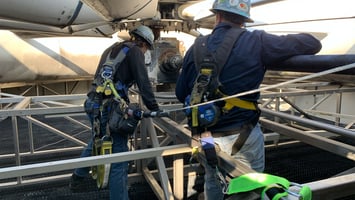
During preventive service, technicians can inspect fan shafts, bearings, motors, drive systems, distribution components, fill media, drift eliminators, casing, and basins for visible signs of wear, damage, scale, corrosion, or other concerns.
Early identification gives maintenance teams more options. Instead of waiting for a problem to dictate the maintenance schedule, the facility can evaluate the issue and determine an appropriate next step.
That could mean addressing something during routine service, planning a repair, or scheduling a more comprehensive inspection if the condition warrants further evaluation.
4. Extend Cooling Tower Service Life
Cooling towers operate in demanding environments. Water, weather, vibration, mechanical movement, and continuous operation all contribute to equipment wear over time.
Preventive maintenance cannot eliminate normal wear, but it can help keep manageable issues from being overlooked.
Routine lubrication, mechanical adjustments, drive maintenance, and component inspections all contribute to the long-term care of the equipment.
This is particularly important for facilities operating aging cooling towers. Maintaining existing equipment and addressing deterioration when it is discovered can help facility teams make more informed decisions about repairs, upgrades, rebuilds, and eventual replacement.
5. Reduce the Risk of Unplanned Downtime
For many facilities, a cooling tower problem affects much more than the tower itself.
Cooling tower downtime can affect HVAC operation, process cooling, production, critical infrastructure, or other systems that depend on reliable heat rejection.
Preventive maintenance helps reduce that risk by giving facility teams opportunities to address equipment needs before a failure forces the issue.
Instead of discovering a worn component during peak demand, maintenance teams can identify concerns during planned service and schedule corrective work around operational requirements.
That transition from reactive maintenance to planned maintenance is particularly valuable in facilities where cooling availability directly affects operations.
6. Maintain Critical Mechanical Components
Cooling towers contain mechanical equipment that requires ongoing attention.
Fans, motors, bearings, shafts, belts, gearboxes, and related drive components are all subject to wear during normal operation. Preventive maintenance provides an opportunity to inspect, lubricate, adjust, and service these components.
OBR's preventive maintenance program, for example, includes maintenance specific to both belt-driven and gear-driven towers. Belt-driven tower service includes powerband belt replacement along with belt tension assessment and adjustment. Gear-driven tower service includes replacing the existing gear oil with new mineral gear oil 220. Fan shafts and bearings are inspected for wear or damage and lubricated as necessary, while motors are examined for casing and hardware condition and lubricated when required.
This type of hands-on maintenance goes beyond simply looking at the equipment. It addresses routine mechanical needs that help keep the tower operating reliably.
7. Monitor Water Distribution, Scale, and Corrosion
Effective water distribution is fundamental to cooling tower performance.
During preventive maintenance, the distribution system can be inspected for conditions that could affect water flow or equipment condition. OBR's maintenance process includes assessing scale buildup, corrosion, and pitting, as well as checking for damaged or missing distribution nozzles.
Finding these conditions provides facility teams with useful information about where additional maintenance or corrective work may be necessary.
It is important to distinguish mechanical cooling tower maintenance from water treatment. Preventive tower maintenance does not replace a facility's water management or water treatment program. Instead, the two work together to support the condition and performance of the cooling system.
8. Improve Maintenance Planning
One of the biggest disadvantages of reactive maintenance is uncertainty.
When equipment is only addressed after something fails, facility teams have less control over timing, budget, labor, and operational impact.
Preventive maintenance provides regular opportunities to evaluate equipment condition and document what technicians find.
OBR's preventive maintenance service includes data sheets documenting measurements, adjustments, and maintenance performed, along with reporting that summarizes cooling tower condition.
That information can help maintenance teams answer important questions:
- What needs attention now?
- What should be monitored?
- What repairs should be planned?
- Are there recurring problems?
- Does an issue require a more detailed evaluation?
Better information supports better maintenance decisions.
9. Prepare the Cooling Tower for Peak Demand
Cooling towers often face their greatest operating demands when ambient temperatures rise and cooling requirements increase.
That makes preventive maintenance before periods of heavy operation particularly valuable.
Servicing mechanical equipment, inspecting the water distribution system, checking tower components, and documenting deficiencies gives the facility an opportunity to address known problems before the tower is placed under greater demand.
For facility and maintenance managers, the objective is not simply to get through another cooling season. It is to enter periods of high demand with a better understanding of equipment condition and fewer unresolved maintenance concerns.
10. Build a More Proactive Asset Management Strategy
Preventive maintenance is most valuable when it becomes part of a broader approach to cooling tower reliability.
Routine service provides one level of information about equipment condition. When technicians discover concerns that require deeper investigation, facilities can then determine whether a comprehensive inspection, vibration analysis, repair, or other specialized service is appropriate.
This creates a maintenance strategy based on equipment needs rather than emergencies.
Over time, that approach can help maintenance and engineering teams better understand their cooling tower assets, prioritize work, and plan for repairs and capital improvements.
What Does Preventive Cooling Tower Maintenance Include?
Preventive maintenance is more than a visual walkthrough of the cooling tower.
The objective is to perform routine mechanical service while inspecting critical components for conditions that could affect reliability or performance.
OBR's preventive maintenance program includes several core areas.
Fan System Optimization
Fan performance depends on proper adjustment.
Preventive service can include verifying fan blade pitch, checking tip clearance, confirming fan tracking, making necessary adjustments, and documenting measurements.
Drive System Maintenance
Maintenance requirements vary depending on the cooling tower's drive configuration.
For belt-driven towers, service may include belt replacement and assessment and adjustment of belt tension. Gear-driven tower maintenance can include replacing gear oil.
Component Inspection and Lubrication
Fan shafts and bearings are inspected for wear or damage and lubricated as needed. Motors are also examined, with observations and maintenance documented.
Distribution System Inspection
The water distribution system is inspected for scale buildup, corrosion, pitting, and damaged or missing nozzles.
General Tower Inspection
Preventive maintenance also includes a general assessment of components such as fill media, drift eliminators, the distribution system, casing, and cold-water basin. Deficiencies or areas of concern are documented for the facility.
Maintenance Reporting
Measurements, adjustments, maintenance performed, and observed conditions should be documented.
This reporting gives facility teams a record of the service performed and can help identify issues that warrant additional attention.
Preventive Maintenance vs. Comprehensive Cooling Tower Inspections
It is important to understand that a general inspection performed during preventive maintenance and a comprehensive cooling tower inspection do not serve exactly the same purpose.
Preventive maintenance focuses on maintaining the equipment. Technicians service, adjust, lubricate, and inspect critical components as part of routine maintenance.
A comprehensive cooling tower inspection provides a more in-depth evaluation of tower condition.
A facility may consider a more comprehensive inspection when it needs deeper insight into equipment condition, is evaluating aging equipment, is planning significant repairs or upgrades, or needs more detailed information to support maintenance and capital planning.
In other words, routine preventive maintenance can help identify a concern. A comprehensive inspection can provide the deeper evaluation needed to understand its extent and determine appropriate next steps.
Where Does Vibration Analysis Fit?
Vibration analysis adds another layer of information that cannot necessarily be obtained through visual inspection alone.
Cooling tower fans, motors, shafts, bearings, gearboxes, and other rotating components can develop mechanical conditions that produce changes in vibration before an obvious failure occurs.
Vibration analysis is a more specialized predictive maintenance service used to evaluate the condition of rotating equipment and identify developing mechanical concerns.
It can be particularly useful when a facility is:
- Investigating unusual vibration
- Troubleshooting recurring mechanical problems
- Monitoring critical rotating equipment
- Looking for additional condition data
- Developing a predictive maintenance strategy
Preventive maintenance, comprehensive inspections, and vibration analysis therefore complement one another, but they should not be treated as interchangeable services.
Preventive maintenance keeps equipment serviced.
Comprehensive inspections provide a deeper assessment of equipment condition.
Vibration analysis provides additional insight into the health of rotating mechanical equipment.
Together, these services can give maintenance and engineering teams a more complete understanding of cooling tower condition and maintenance needs.
What About Cooling Tower Cleaning and Decontamination?
Mechanical preventive maintenance and cooling tower cleaning are also related, but they serve different purposes.
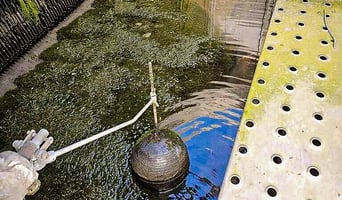
Cooling towers are exposed to dirt, debris, scale, algae, and other contaminants during normal operation. Cleaning helps remove accumulated material from areas such as hot water basins, distribution systems, mechanical surfaces, fill areas, and cold-water basins.
OBR offers cleaning and decontamination as a separate service option, as well as a complete service package that combines cleaning and decontamination with preventive maintenance. The cleaning process includes pre- and post-decontamination, system protection, debris removal, and pressure washing of tower components.
Separating these services in the article helps facility teams understand an important point: maintaining the mechanical equipment and keeping the tower clean are both important parts of cooling tower care, but they address different maintenance needs.
Signs Your Cooling Tower May Need Attention
Scheduled maintenance is important, but facility teams should also pay attention to changes between service visits.
Conditions that may warrant further evaluation include:
- New or unusual vibration
- Unusual mechanical noise
- Changes in cooling performance
- Visible corrosion or deterioration
- Damaged or missing distribution nozzles
- Scale buildup
- Damaged fill or drift eliminators
- Water distribution problems
- Mechanical component wear
- Recurring repair issues
The appropriate response depends on the condition. Some issues may be addressed through routine maintenance, while others may require a comprehensive inspection, vibration analysis, cleaning, repair, or component replacement.
Cooling Tower Preventive Maintenance Checklist
Every tower and application is different, so maintenance requirements should be based on the equipment, operating conditions, and manufacturer recommendations.
As a general starting point, facility teams should pay attention to:
- Fan blades and fan assemblies
- Fan tracking and clearance
- Belts and belt tension
- Gearboxes
- Fan shafts
- Bearings
- Motors
- Distribution nozzles
- Water distribution components
- Fill media
- Drift eliminators
- Casing
- Basins
- Scale and corrosion
- General structural and mechanical condition
Routine maintenance should also include documentation of work performed and deficiencies identified so that unresolved issues can be incorporated into future maintenance planning.
Frequently Asked Questions About Cooling Tower Maintenance
Have Question? We are here to help
How often should a cooling tower receive preventive maintenance?
As a general recommendation, cooling towers should receive professional preventive maintenance at least once per year. Annual service provides an opportunity to inspect critical components, perform routine mechanical maintenance and adjustments, document equipment condition, and identify issues that may require additional attention.
Some cooling towers may benefit from more frequent service depending on operating hours, equipment condition, environmental conditions, system demands, and manufacturer recommendations. Facilities with critical cooling requirements or equipment operating under demanding conditions should evaluate whether additional maintenance or condition monitoring is appropriate.
Is annual preventive maintenance enough?
Annual preventive maintenance provides an important foundation for cooling tower reliability, but it may not address every equipment need. Preventive service includes routine mechanical maintenance, adjustments, and a general tower inspection. A facility may also benefit from a more comprehensive cooling tower inspection, vibration analysis, cleaning and decontamination, or additional service based on equipment condition and operating requirements.
Is preventive maintenance the same as a cooling tower inspection?
No. Preventive maintenance may include a general inspection as part of servicing the tower, but a comprehensive cooling tower inspection is a more in-depth service focused on evaluating equipment condition.
Is vibration analysis included with preventive maintenance?
Vibration analysis is a separate, more specialized service that provides additional information about the condition of rotating mechanical equipment. It can complement preventive maintenance when more detailed condition monitoring is needed.
Does preventive maintenance include cooling tower cleaning?
Not necessarily. Cleaning and decontamination address different maintenance needs than mechanical preventive maintenance. OBR offers preventive maintenance, cleaning and decontamination, and a complete service package that combines the two.
What happens if a technician finds a larger problem during preventive maintenance?
Finding the issue is the first step. Depending on the condition, the facility may need a more comprehensive inspection, vibration analysis, repair, component replacement, or another specialized service to better understand or correct the problem.
Make Cooling Tower Maintenance Proactive, Not Reactive
Cooling tower maintenance is not just about responding when something breaks.
A proactive maintenance strategy helps facilities keep mechanical components serviced, identify developing concerns, understand equipment condition, plan repairs, and reduce the risk of unexpected problems affecting operations.
Preventive maintenance provides the foundation. When more information is needed, comprehensive inspections and vibration analysis can provide deeper insight into structural and mechanical condition. Cleaning and decontamination can address another important part of tower care.
Together, these services give facility managers, maintenance teams, and engineers more information and more control over how their cooling tower assets are maintained.
OBR Cooling Towers provides preventive maintenance, comprehensive cooling tower inspections, vibration analysis, cleaning and decontamination, repairs, rebuilds, and other cooling tower services to help facilities support reliable long-term operation.
Ready to take a more proactive approach to cooling tower maintenance?
Contact OBR Cooling Towers to discuss your equipment, maintenance needs, and the right service approach for your facility.